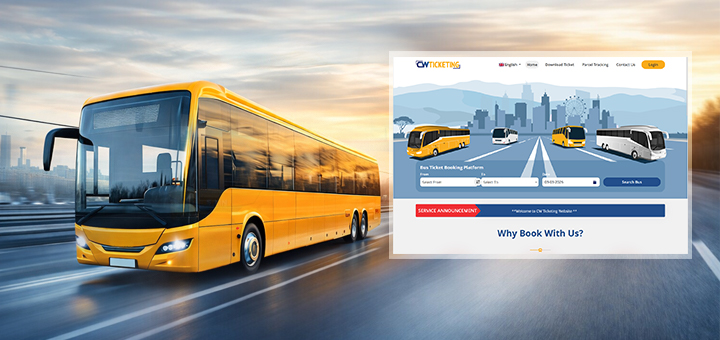
The post-pandemic travel industry is booming. But if you look closely, the biggest winners aren’t always the ones behind the steering wheel. They are the ones behind the screens, making those memorable journeys possible.
1. What is A Bus Ticket Booking Business: Understanding the “Fleetless” Business Model
A bus ticket booking business is essentially a bridge between travellers and bus operators.
With a bus ticketing business, you aren’t starting a transportation company; rather, you are starting a bus ticketing marketplace.
Your job is to aggregate the schedules and seats of existing bus operators into one easy-to-use platform. You earn a commission every time a traveller clicks “book.” It’s the same model used by giant online bus ticket booking platforms.
Starting a bus ticket booking business is one of the most scalable, low-overhead ventures you can launch today.
You don’t need a fleet of million-dollar coaches; you just need the right strategy and a powerful online bus booking system.
In this guide, I’ll take you through the exact steps to build a successful booking agency from the zero level. Onwards!
Why this works in the current booking landscape:
- Low Entry Cost: No vehicle maintenance or fuel prices to worry about.
- Massive Scalability: You can sell 10 tickets or 10,000 tickets with the same amount of effort.
- Global Reach: Not only local commutes or shuttle services, but you can sell tickets for routes in different cities or even different countries from your home office.
2. Market Research: Finding Your Profitable Niche
“Selling bus tickets” is too broad a term. To stand out from established competitors, you need to find a gap in the market and fill that gap with your services.
Are local commuters in your area struggling with a clunky old state-run app?
Are international tourists looking for luxury intercity transfers?
These are the questions I’d ask while researching the market.
Profitable Niches to Consider:
- The “Commuter Boss”: Focusing on daily workers who need reliable, recurring bookings. (Shuttle services, local bus, etc.)
- The Luxury Traveler: Aggregating only “Executive” or “Sleeper” class intercity buses with Wi-Fi and amenities.
- The Event Specialist: Partnering with music festivals or sports events to provide dedicated booking portals.
3. The Infrastructure: Choosing Your Online Bus Booking System
This is the single most important decision you will make when building a bus ticket booking platform.
Your website functions as your primary storefront, while your booking engine serves as the checkout counter. If the interface is slow, hard to navigate, or lacks real-time updates, your venture will collapse before the first bus leaves the station.
A modern online bus booking system needs to do more than just take payments. It needs to sync with bus operators’ inventories in real-time so you never overbook a seat.
Must-Have Features for A Bus Ticketing Platform:
- Real-Time Seat Maps: Customers want to choose their seat before confirming booking.
- Multi-Payment Gateways: Support for credit cards, mobile wallets, and even crypto if your market demands it.
- Automated Notifications: Instant SMS and email confirmations with QR-coded tickets.
- Mobile Accessibility: Over 85% of travel bookings happen on smartphones. You need a dedicated Android and iOS app.
4. Legalities and Partnership Building
Once your platform is live, the focus shifts from technology to inventory. Since you aren’t operating the vehicles yourself, your success depends on building a network of reliable bus operators.
How to pitch to operators:
Many traditional transport companies excel at logistics and fleet maintenance, but often struggle to capture the modern digital traveller.
You can bridge this gap by positioning your agency as a high-tech sales arm.
Offer the Deal
By offering to improve their “load factor” — the percentage of occupied seats per trip — you provide a clear value proposition: you handle the digital aspect and customer acquisition, while they focus on logistics.
The Commission
This is where you make the profit.
This partnership typically operates on a commission-based model, where you get between 10% and 20% of every ticket sold through your portal.
The Legal Aspect
A successful partnership requires more than just a handshake; it needs a solid legal foundation.
A comprehensive Service Level Agreement (SLA) is essential to define the boundaries of responsibility, specifically regarding ticket refunds, trip delays, and passenger safety.
Furthermore, you must ensure your agency meets all regional compliance standards by consulting with local travel licensing boards.
Navigating these legalities early will protect your brand and ensure that your business remains as professional as the technology powering it.
5. Branding: Your Own White Label Business
One of the fastest ways to gain trust is to look like an established player from day one. This is where White Labelling comes into play.
Instead of building a system from scratch (which costs tens of thousands of dollars), you can use a solution like the CW Ticketing System. It allows you to “white-label” the entire platform. This means you use their world-class tech but put your logo, your brand colours, and your company name on everything.
Your customers will see a professional, high-end booking portal that belongs entirely to you. It builds immediate credibility and allows you to focus on marketing rather than debugging code.
6. Marketing: Filling the Seats with Real Passengers
You have the site, the app, and the routes. Now, how do you get travellers to find you?
- SEO (Search Engine Optimization): This is your long-term goldmine. Create content around specific routes, such as “Best bus from London to Edinburgh” or “How to book cheap bus tickets in Tanzania.”
- Social Media & Influencers: Partner with travel vloggers who can show the “experience” of booking through your app.
- Referral Programs: Give your users a discount code to share with friends. Word-of-mouth is incredibly powerful in the travel niche.
7. Operational Support and Customer Experience
Travel involves people, and people sometimes have problems. So, even with the best automation, you might face a challenge or two from time to time.
A successful booking business needs a streamlined “Dispute Resolution” process.
When a bus is late or a passenger needs to cancel, your online ticket management system should handle the heavy lifting. Automated refund workflows and 24/7 chat support (even if it’s a smart AI bot) will help you remain a trusted booking platform.
That’s all you need to start your own bus ticket booking business.
8. Ready to Launch? Build Your Marketplace with CW Ticketing System.
Making a reality of your dream business plan can be easy and simple if you have the right tools and follow the correct steps.
CW Ticketing System helps you make the right decisions by providing an all-in-one infrastructure.
All you need to do is onboard operators and start selling seats immediately.
Why entrepreneurs choose us:
- Complete Marketplace Control: Onboard multiple operators and manage all your commissions from one central dashboard.
- White-Label Excellence: Full branding freedom. Your logo, your identity, backed by our world-class tech.
- Dynamic Pricing Engine: Boost your revenue by adjusting fares based on demand, just like the big airlines.
- All-in-One Solution: From a web portal and Android/iOS apps to a dedicated POS for walk-in customers — we’ve got it all covered.


Leave a Reply