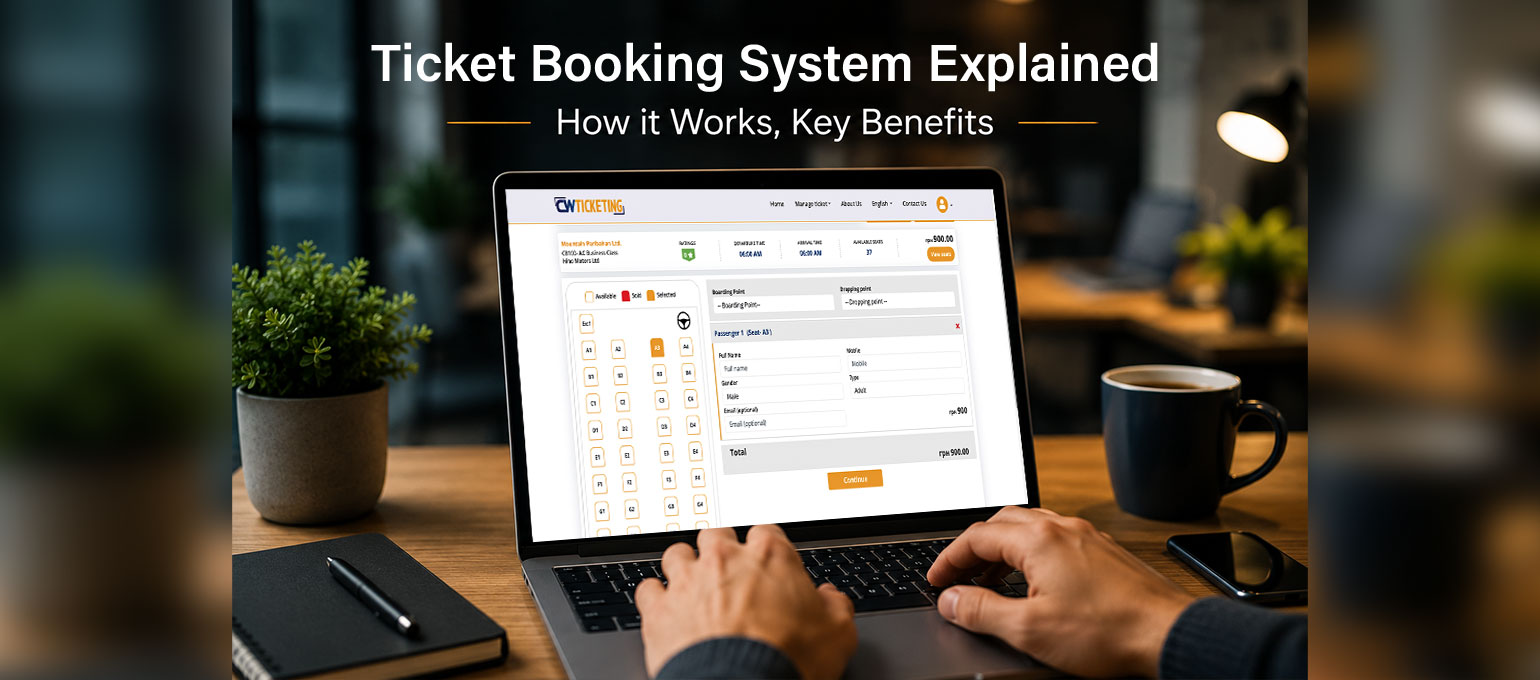
A ticket booking system is a digital solution that manages the entire process of selling and handling tickets — from listing seat availability to confirming bookings and verifying entry.
When someone books a ticket, the system updates availability in real time, processes the payment, and generates a unique ticket (usually with a QR code or barcode). That ticket can later be checked and validated at entry to ensure it’s genuine and hasn’t been used before.
But for businesses, a digital ticket booking software is a lot more than selling tickets.
At its core, it operates on a single synchronized data source that ensures every seat, every booking, and every validation point is connected so that what’s sold, what’s recorded, and what’s checked at entry are always consistent and transparent.
And consistency and transparency are what separate a digital ticket booking system from manual setups.
How a Digital Ticket Booking System Actually Works
A digital ticket management system is the central system that keeps every operational aspect running smoothly and in sync with one another.
Here are the fundamental layers of an online ticket booking system:
Layer 1: Inventory Creation
Bus seats, event entries, time-based slots — everything begins with inventory. And each unit is defined with rules such as pricing tiers, availability limits, schedules, and sometimes dynamic pricing conditions.
In this layer, the system is not selling anything yet, but structuring what can be sold.
Layer 2: Real-Time Availability Control
Once inventory goes live, the system constantly updates availability across all sales channels — website, mobile apps, driver apps, or agent apps. When a user selects a seat or slot, the system temporarily locks it. This prevents double-booking, which is one of the most common failure points in manual systems.
Layer 3: Transaction Processing
After selection, the booking moves into the payment stage. The system connects with payment gateways to confirm transactions instantly.
Once payment is successful, it generates a unique ticket (PNR), usually with a QR code, barcode, or alphanumeric code. It’s a verification key that validates the booking and prevents fraud.
Layer 4: Validation and Entry Control
At the point of entry, whether it’s a bus counter or event gate, the ticket is scanned and verified against the system in real time.
This ensures that:
- The ticket is genuine
- It hasn’t been used before, and
- It matches the correct time, seat, or access level
Layer 5: Settlement and Reporting
An online ticket booking system logs and categorises every single transaction. Because every transaction is recorded in real time, operators can track revenue, reconcile payments, and identify discrepancies without manual calculations.
This is where digital systems eliminate revenue leakage and accounting errors.
Why Real-Time Ticket Inventory Synchronisation Matters
For growing transport and event operators, one of the biggest hurdles is real-time ticket inventory synchronisation.
Without a centralised and synchronised system:
- The same seat can be sold twice across different channels
- Payments may not match actual bookings
- Manual tracking may lead to missed or unreported revenue
- Fraudulent or duplicate entries become harder to detect
For example, if you sell a bus ticket on your website and another through a third-party travel agent, it can often cause a data lag. If that lag exists, you’re risking the biggest nightmare that is overbooking.
A modern online ticketing system like CWTicketing acts as a Single Source of Truth (SSoT). So, whether a ticket is bought at a physical kiosk, a mobile app, or a partner site, the inventory is updated in milliseconds.
Complete Operational Control Through Online Ticketing
Most transport agencies mistake ticket booking systems for easy ticket purchase. But that’s only part of the story.
A modern ticket booking software is multifaceted. It’s an inventory management and transaction control system designed to maintain flexibility and accuracy under pressure. So, when demand spikes or business grows, it adapts smoothly.


Leave a Reply